
Warm Neutral Kitchen Moodboard: Exact Finishes and Fixtures Guide
Warm neutral kitchens are everywhere right now, and honestly, it makes sense. People are tired of icy gray kitchens that feel more like a waiting room than a home.
A warm neutral kitchen feels softer, more elevated, and much easier to actually live in. It has that polished, layered look without feeling cold, trendy, or designed purely for resale photos. The best ones feel calm without being boring and luxurious without screaming for attention.
It is also one of the easiest looks to get wrong.
A lot of people start with one beautiful inspiration image, then begin choosing finishes piece by piece and somehow end up with cabinet colors fighting the countertops, hardware pulling too yellow, lighting that belongs in another house entirely, and tile that suddenly takes over the whole room.
The moodboard looked beautiful. The actual selections somehow started arguing with each other halfway through the project.
That is where this guide comes in.
If you love creamy whites, soft mushroom tones, natural oak, subtle stone movement, and warm metal accents, here is how to build that palette in a way that actually feels cohesive from the start. Think of this as the practical version of the moodboard: what works, what does not, and which finish combinations make a kitchen feel expensive instead of confused.
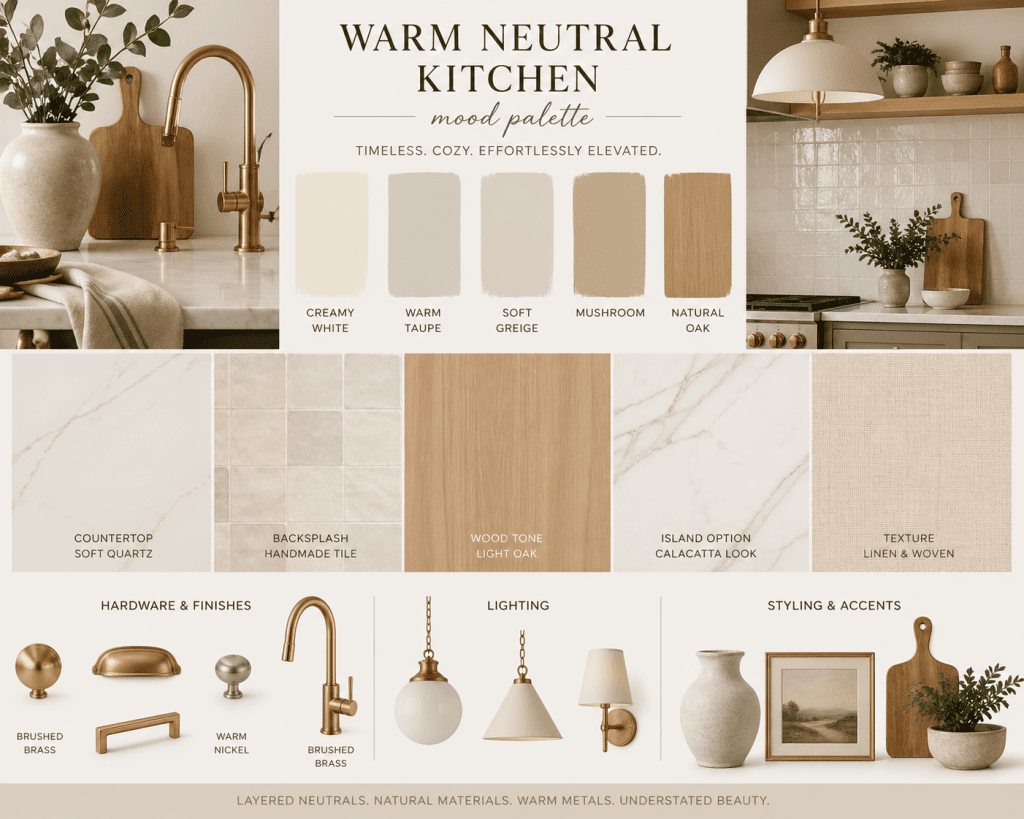
What “Warm Neutral” Actually Means
A warm neutral kitchen is not beige overload, and it is definitely not a yellow kitchen pretending to be sophisticated.
The best versions sit somewhere in the middle where everything feels soft, balanced, layered, and slightly organic.
Usually, that means a palette built around:
- creamy whites instead of stark whites
- light oak or natural wood tones instead of orange wood
- soft taupe, mushroom, sand, and greige undertones
- stone with gentle movement instead of dramatic contrast
- warm metals with muted finishes instead of ultra-polished shine
The result is a kitchen that feels calm, high-end, and surprisingly flexible. Depending on the details, it can lean modern, classic, minimal, organic, or slightly European without completely changing the core palette.
That flexibility is part of why this style has become so popular.
Start With the Cabinet Color Because Everything Else Follows It
Cabinetry usually sets the tone for the entire room. If the cabinet color is off, everything around it has to work overtime to recover.
For warm neutral kitchens, these cabinet directions consistently work best.
Creamy White Cabinets
This is the safest option if you want the kitchen to feel bright without looking sterile. A creamy white should feel soft and clean, not yellow or overly antique.
The goal is warmth with restraint.
Best for:
- smaller kitchens needing brightness
- kitchens with limited natural light
- spaces where you want the countertops or lighting to stand out more
Light Taupe or Mushroom Cabinets
This is where kitchens start feeling more tailored and custom.
A soft mushroom or taupe cabinet color instantly adds depth without making the room feel dark. It also tends to hide fingerprints and daily wear better than bright white cabinetry.
Best for:
- homeowners wanting a more designer-driven look
- kitchens with strong natural light
- spaces that should feel softer and moodier without becoming dark
Natural Oak or Light Wood Cabinets
A good natural oak finish adds warmth faster than almost anything else.
The key is choosing a wood tone that feels quiet and refined rather than orange, glossy, or overly rustic. You want soft grain, subtle movement, and a matte or low-sheen finish.
Best for:
- modern organic interiors
- mixed-material kitchens
- anyone trying to avoid an all-painted kitchen
Two-Tone Cabinet Combinations
Warm neutral kitchens handle two-tone cabinetry especially well.
Think:
- creamy uppers with oak lowers
- mushroom islands with lighter perimeter cabinets
- natural wood accents mixed with painted finishes
When done properly, it feels layered and intentional. When done badly, it feels like two kitchens accidentally met during construction.
A good rule:
keep the undertones related.
If the paint color leans warm, the wood should too. If the countertops have creamy undertones, the cabinetry should not suddenly shift icy gray or pink-beige.
Countertops Should Support the Kitchen, Not Hijack It
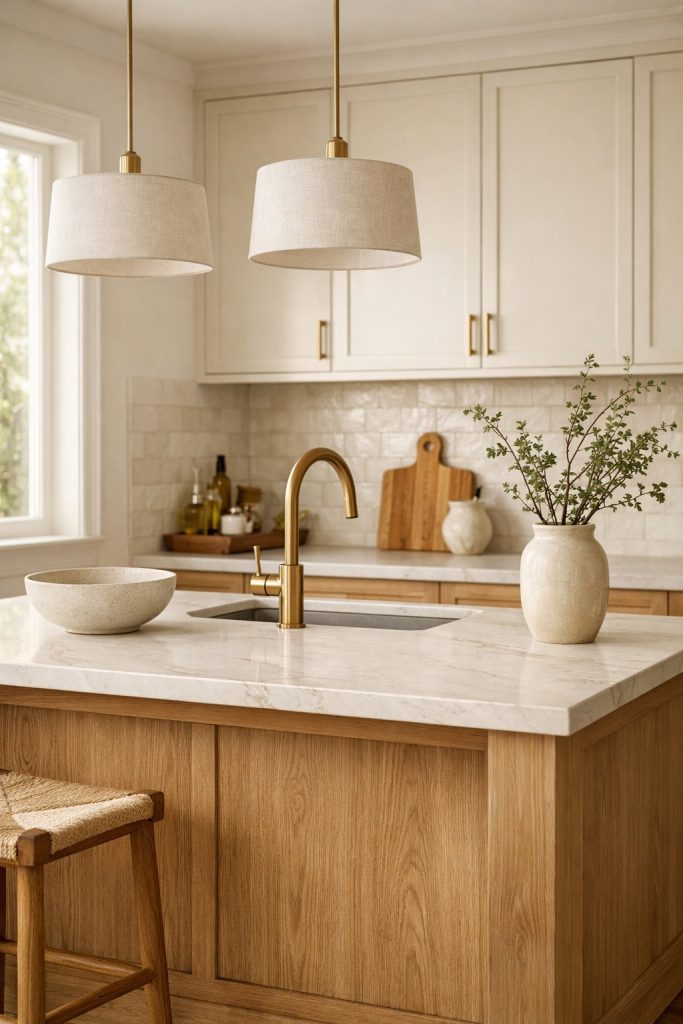
Warm neutral kitchens work best when the countertops add softness and movement without becoming the entire personality of the room.
The safest countertop directions are:
Soft White Quartz With Gentle Veining
This is the easiest crowd-pleaser.
It works with nearly every cabinet direction above and keeps the kitchen feeling clean without overpowering the space. Look for subtle veining with slightly warm undertones instead of harsh gray contrast.
Honed or Leathered Stone Looks
A lower-sheen finish can completely change the feel of a kitchen.
Matte surfaces tend to feel quieter, softer, and more architectural than ultra-polished slabs. This works especially well alongside warm wood tones and muted metal finishes.
Cream-Based Stone Tones
Countertops with ivory, sand, or off-white bases almost always work better in warm neutral kitchens than bright white slabs with cold veining.
This is one of those tiny details people cannot always identify immediately, but it changes the entire feel of the room.
What to avoid:
- heavy contrast veining
- blue-gray slabs
- overly glossy finishes
- busy patterns competing with tile and hardware
Warm neutral kitchens rely on restraint. If every finish is trying to dominate the room, the palette loses its softness.
Faucet and Hardware Finishes Can Make or Break the Palette
This is where a lot of kitchens quietly fall apart.
Warm neutral kitchens look effortless, but the wrong metal finish immediately throws everything off balance. If the hardware is too polished, too orange, too yellow, or too cool, the entire palette starts feeling mismatched.
These finishes almost always work best:
Brushed Brass
Still popular for a reason.
The key is choosing a muted or aged brass finish instead of bright yellow gold that feels overly trendy or flashy.
Warm neutral kitchens look best with brass that feels soft and slightly lived-in.
Warm Nickel
Warm nickel is one of the most underrated finishes right now.
It adds warmth without obvious gold tones and works beautifully with creamy cabinets, mushroom paint colors, natural stone, and oak accents.
It quietly makes kitchens feel expensive.
Champagne Bronze
A good middle-ground option for homeowners wanting something current but slightly softer than traditional brass.
It works especially well in modern spaces with cleaner cabinet lines.
Matte Black, Used Carefully
Black can absolutely work in a warm neutral kitchen, but it should usually act as punctuation rather than the entire story.
A black faucet or a few black accents can ground the space nicely. Too much black starts pulling the kitchen away from the softness that makes warm neutrals appealing in the first place.
When comparing fixtures later, always look at them beside your cabinet and countertop samples. A finish that looks beautiful alone can suddenly feel harsh once it is surrounded by softer materials.
Samples are cheaper than regret.
Lighting Is What Turns a Pretty Kitchen Into a Finished One
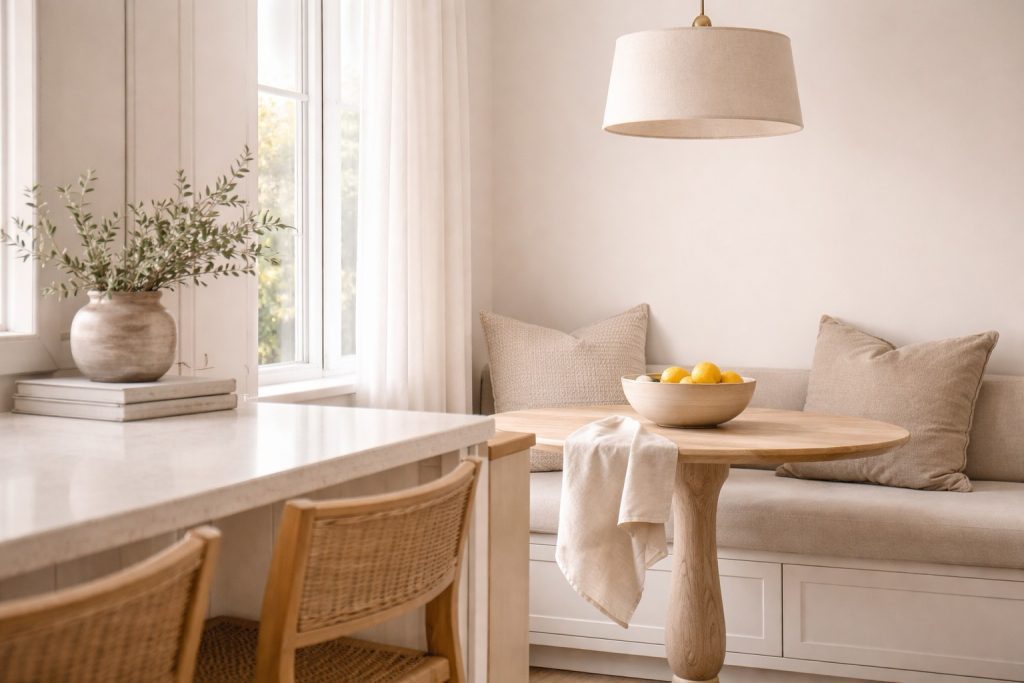
A lot of kitchens have perfectly decent cabinets, countertops, and hardware, and then the lighting comes in and ruins the mood like a loud cousin at a quiet dinner.
Warm neutral kitchens need lighting that feels soft and sculptural, not overly industrial or aggressively formal.
The best fixtures usually add warmth, shape, and texture without trying too hard.
Globe Pendants
Simple, timeless, and easy to style.
These work especially well above islands when you want something clean that still feels elegant.
Linen or Fabric Shades
These are everywhere right now for good reason.
Fabric shades instantly soften a kitchen and pair beautifully with warm woods, creamy stone, and muted metals.
Aged Metal Fixtures
Soft golds, aged brass, and warm metallic finishes help tie the palette together without making everything feel too coordinated.
Minimal Wall Sconces
A small sconce near a pantry wall, coffee station, or built-in area can add warmth and personality in a way recessed lighting never will.
And yes, bulb temperature matters more than people think.
A warm neutral kitchen under harsh cool lighting will look completely different than it did in your sample stack. Warm lighting keeps the palette flattering and cohesive.
The wrong bulb can make a beautiful kitchen look vaguely haunted.
Cabinet Hardware Should Feel Simple, Not Shouty
Hardware seems minor until you choose the wrong one and suddenly notice it every single day forever.
For warm neutral kitchens, the best hardware shapes are clean, understated, and slightly softened.
Slim Bar Pulls
Perfect for modern kitchens that still want warmth.
They keep cabinetry feeling clean without becoming cold or overly minimal.
Rounded Knobs
A softer, slightly more classic option that works beautifully in transitional kitchens.
Edge Pulls or Integrated Pulls
These create a quieter, more architectural feel and pair especially well with flat-panel cabinetry.
The finish should coordinate with your faucet and lighting, but it does not need to match perfectly.
In fact, kitchens often look more natural when the finishes feel related instead of identical. Think “same family,” not “copy and paste.”
Hardware is also one of the easiest places to save money without making the kitchen look cheap.
Backsplash Tile Should Add Texture, Not Visual Chaos
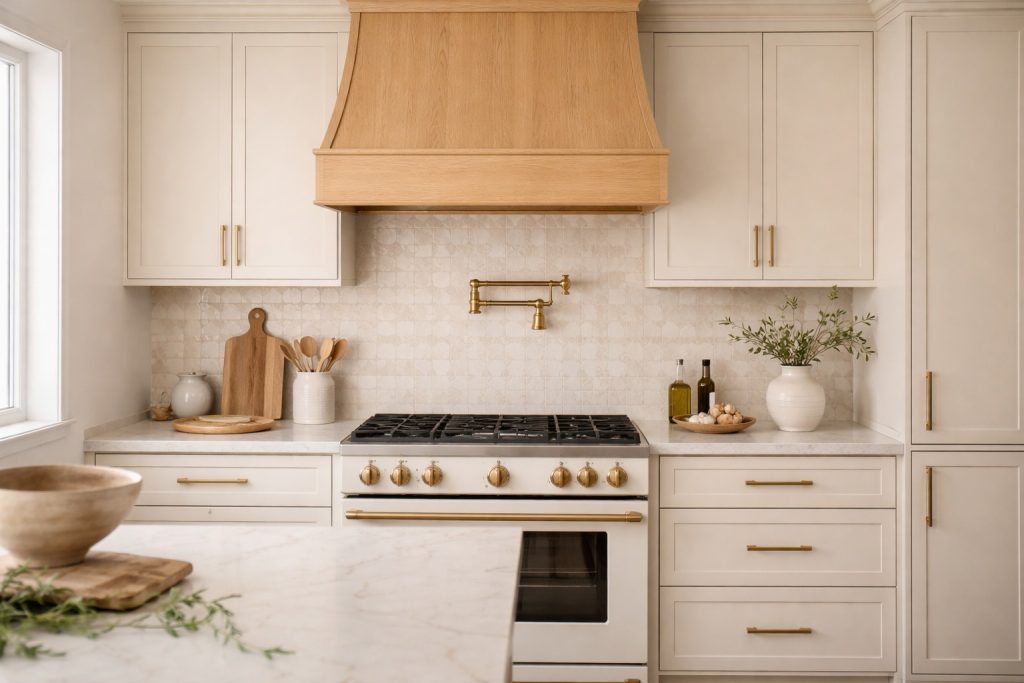
Tile is where people get seduced by pretty samples and accidentally install a full-time distraction.
Warm neutral kitchens benefit most from backsplash tile that adds texture and depth quietly.
Handmade-Look Ceramic Tile
One of the strongest choices for this palette.
Slight surface variation and softer edges add warmth without overwhelming the kitchen.
Zellige-Look Tile
Still popular because it works.
The tonal variation and subtle shine help warm neutral kitchens feel layered and collected instead of flat.
The key is restraint. Keep the color palette soft.
Warm White or Cream Tile
This keeps the room feeling calm while still adding depth through texture and layout.
Simple Tile Layouts
Stacked vertical or horizontal layouts can make even basic tile feel elevated and modern.
Simple layouts help prevent the kitchen from feeling visually overcrowded.
And yes, grout color matters more than most people expect.
Bright white grout often feels too harsh in warm neutral kitchens. Softer warm white or light beige grout tends to blend much more naturally.
The Wood Tone Matters More Than People Think
If you are bringing natural wood into the kitchen through cabinetry, shelving, stools, or styling pieces, the tone matters a lot.
The wood tones that work best tend to feel:
- light to medium in depth
- matte or low sheen
- soft and natural
- warm without turning orange
This applies to:
- bar stools
- floating shelves
- dining chairs
- cutting boards
- decorative accessories
One mismatched wood tone can stand out just as much as the wrong countertop or faucet finish.
Styling Is What Keeps the Kitchen From Feeling Flat
A lot of warm neutral kitchens are technically beautiful but still feel unfinished because nothing softens the room or makes it feel lived in.
That is where styling comes in.
Not clutter.
Styling.
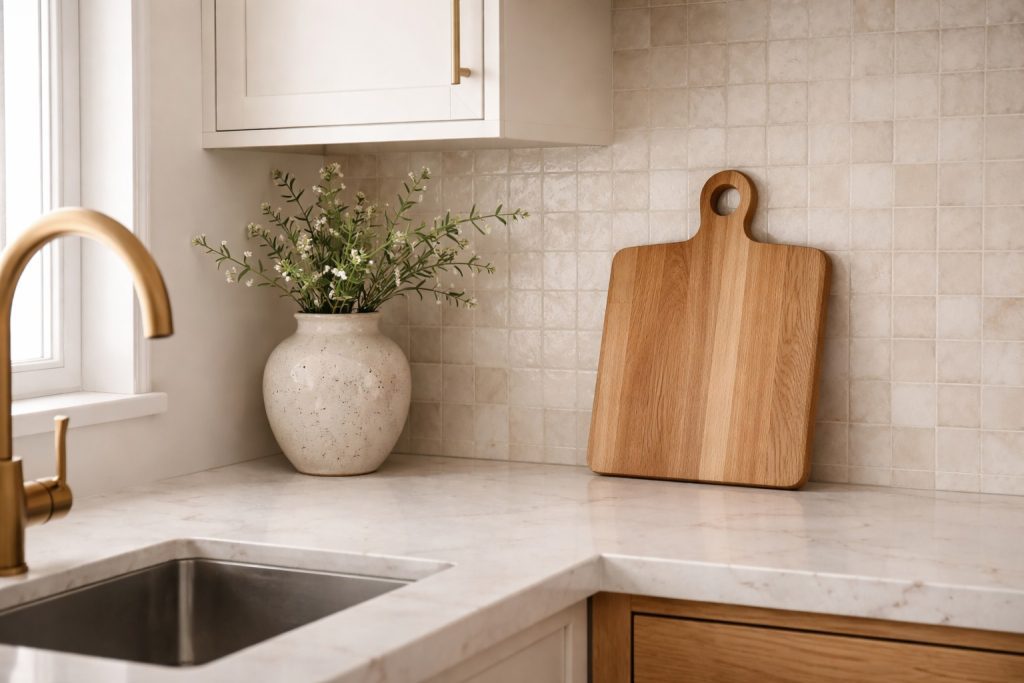
The best finishing pieces for this look are usually:
- ceramic bowls and vases
- natural wood boards
- linen runners
- woven textures
- quiet bar stools in wood, cane, or soft upholstery
- simple trays for oils, soap, or everyday kitchen items
These details help bridge the gap between renovation finishes and actual daily living, which is usually the difference between a showroom kitchen and one people genuinely want to spend time in.
How to Keep the Whole Palette Cohesive
If you want the short version, here it is:
Warm neutral kitchens work when everything feels like it belongs in the same conversation.
That means:
- do not mix icy whites with creamy undertones
- do not pair organic finishes with one ultra-glossy showpiece
- do not introduce super-yellow brass next to pink-beige cabinetry
- do not overcomplicate the tile, counters, and hardware all at once
Pick:
- one or two areas for texture
- one primary metal finish
- one clear stone direction
- cabinet tones that genuinely support the room
A lot of expensive kitchens still feel off simply because nobody edited the selections.
Restraint usually wins.
A Warm Neutral Kitchen Formula That Almost Always Works
If you want a reliable starting point, this combination is very hard to mess up:
- creamy white or mushroom cabinetry
- soft white quartz with warm subtle veining
- brushed brass or warm nickel faucet
- handmade-look warm white backsplash tile
- light oak stools or accents
- globe or linen pendant lighting
- simple coordinating cabinet pulls
It works whether your style leans:
- modern
- transitional
- organic
- slightly European
- minimal but warm
Final Thoughts
The best warm neutral kitchens do not feel trendy in a desperate way.
They feel settled.
Layered.
Comfortable.
Thought-through.
They photograph beautifully, sure, but the bigger reason people keep gravitating toward them is because they actually age well. The palette feels calm instead of exhausting, and it leaves room for real life to exist around it.
That is part of why people save these kitchens so often.
They work with changing decor. They feel inviting in the morning and relaxing at night. They do not overwhelm the eye. Not bad for a room that also has to survive dishes, crumbs, grocery bags, and somebody inevitably leaving one cabinet door open for absolutely no reason.
If you are building a warm neutral kitchen moodboard, start with the undertones first, then layer in texture, metal, lighting, and shape.
Get those decisions right, and the kitchen will feel far more elevated and cohesive than any single “hero” product ever could.
Because that is really the whole game:
not finding one perfect item, but making sure every piece understands why it belongs there.
Warm Neutral Kitchen FAQs
A warm neutral kitchen uses soft, inviting tones like creamy white, mushroom, taupe, natural oak, and warm metallic finishes to create a timeless and cohesive look. Unlike cooler gray kitchens, warm neutral kitchens feel softer, calmer, and easier to live with long term.
Creamy white, soft mushroom, light taupe, and natural oak cabinet finishes work especially well in warm neutral kitchens. The key is choosing colors with warm undertones that coordinate with the countertops, backsplash, and hardware.
Soft white quartz with subtle warm veining, honed stone surfaces, and cream-based countertop tones pair beautifully with warm neutral kitchens. Busy patterns and harsh gray undertones usually feel too cold for this style.
Yes. Brushed brass and softer aged brass finishes remain extremely popular in kitchen design, especially in warm neutral kitchens where they add warmth and contrast without feeling overly trendy.
Layering materials and textures is what keeps a neutral kitchen from feeling flat. Warm wood tones, textured backsplash tile, soft lighting, matte finishes, and subtle styling pieces help create depth and warmth without overwhelming the space.